

News
- Home
- News
Staff Induction Training for Access to Justice Project Strengthens Team Vision and Commitment
Posted On March 13, 2026
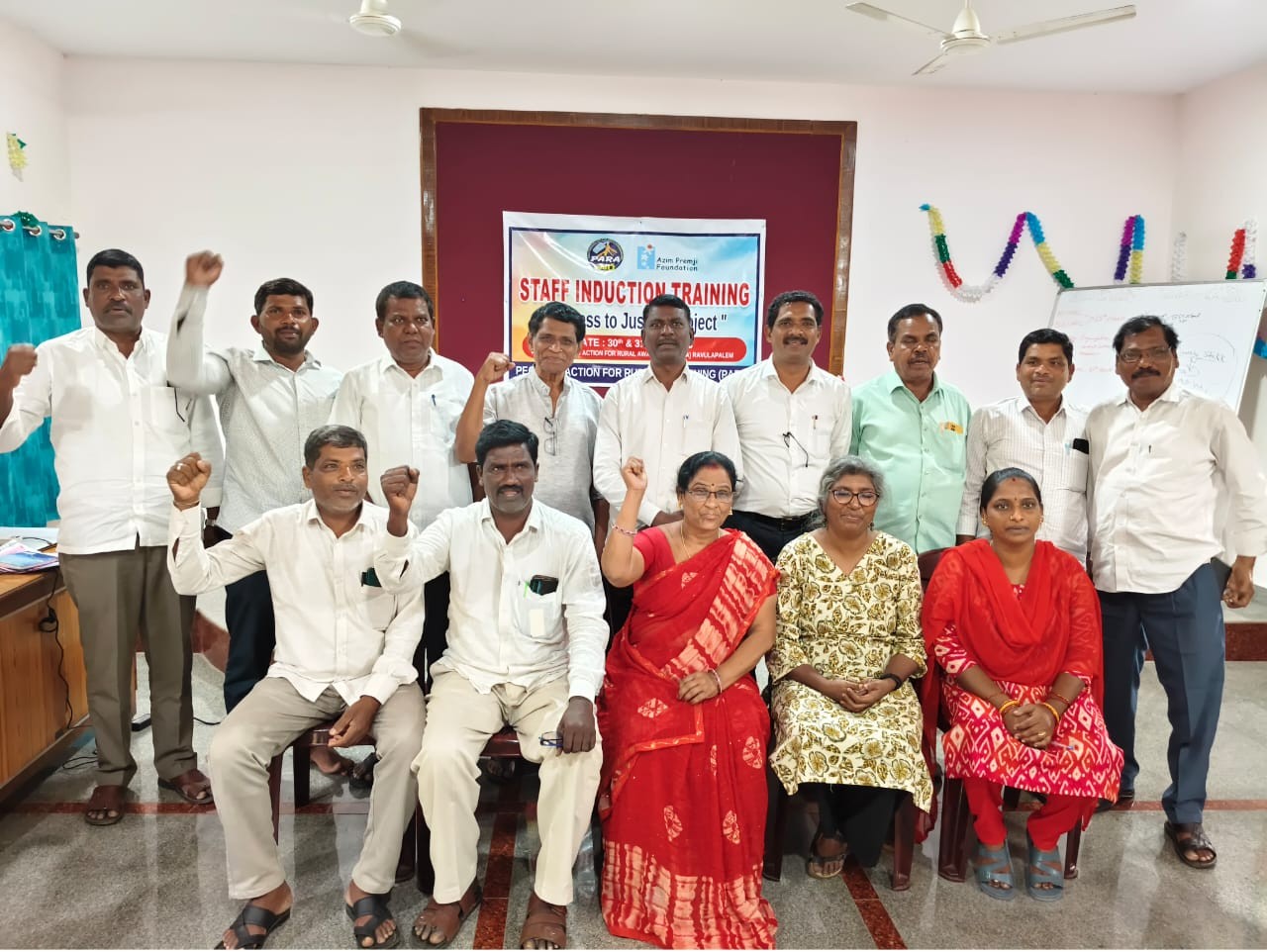
A two-day Staff Induction Training for the Access to Justice Project was conducted on 30–31 January 2025 to orient newly appointed staff members to the organization’s vision, history, and project framework. The training aimed to build a shared understanding of strengthening access to justice for Dalit communities in Andhra Pradesh and Telangana.
The program began with the recitation of the Preamble of the Indian Constitution, reaffirming the values of justice, liberty, equality, and fraternity. A reflective quote from Rabindranath Tagore’s Geetanjali was also shared to set the tone for the training.
Participants then watched a short video titled “The Story of the Camel,” which became a powerful metaphor for reflection. Through discussion, participants highlighted how marginalized communities often possess inherent strengths and constitutional rights but face barriers in accessing opportunities and justice.
During the session, Mr. Chitti Babu, Program Manager, explained that the camel’s features symbolized resilience, the ability to move forward, and protection from adversities. Ms. Rekha Abel emphasized that communities already have the strength to overcome challenges, and the role of the organization is to promote confidence, independence, and empowerment.
A special session by Fr. Thomas Pallithanam traced the history and journey of DBSU over the past 25 years, recalling important milestones such as the cycle rally from Amalapuram to Hyderabad and the organization’s continuous work for Dalit rights despite funding challenges. Regional experiences from Andhra Pradesh and Telangana were also shared by the coordinators.
The training also introduced the Access to Justice Project, which aims to support survivors of caste atrocities in accessing relief, compensation, fair trials, and welfare entitlements. The project plans to document and support 950 atrocity cases, address land rights issues of Dalit families, strengthen Vigilance and Monitoring Committees, and facilitate access to welfare schemes for affected communities.
Roles and responsibilities of the project team were clearly outlined, including the roles of the Project Manager, State Coordinators, District Coordinators, and Mandal Coordinators.
On the second day, the Director formally distributed appointment letters to the staff. The team also prepared a five-month action plan focusing on documentation of cases, fact-finding visits, legal clinics, land rights documentation, and strengthening community monitoring committees.
The Project Manager emphasized the importance of systematic documentation, timely reporting, and financial accountability. A reporting structure was established to ensure smooth coordination among Mandal, District, and State teams.
The induction training concluded with encouraging remarks from the Director and Project Manager. The program helped build a strong foundation for the team by strengthening their understanding of constitutional values, organizational history, and project goals, enabling them to work collectively toward justice and dignity for marginalized communities.
Read More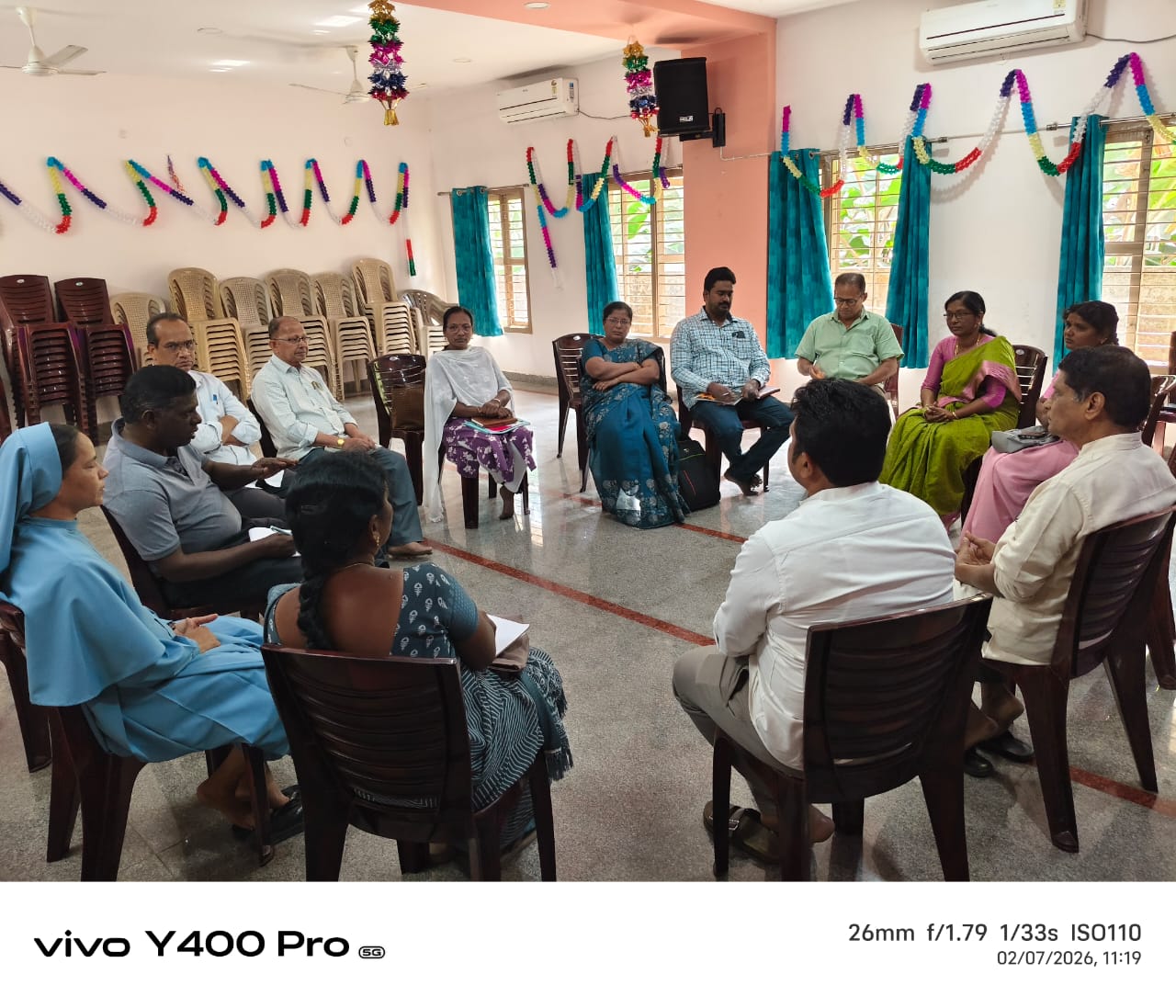
Annual Review and Planning Meeting of EPC–SEPP at PARA
Posted On March 13, 2026
The Annual Review cum Planning Meeting of the Educative Pastoral Council (EPC) and the Salesian Educative Pastoral Plan (SEPP) was held on 7 February 2026 at PARA. The meeting began with the recitation of the Preamble of the Indian Constitution, reaffirming the participants’ commitment to justice, liberty, equality, and fraternity.
A short reflection based on the story of a camel in a zoo invited participants to think about the situation of marginalized communities. Although the Constitution guarantees rights and freedom, many people still remain unable to access these rights. The reflection reminded the participants that their mission is to help people move toward dignity, freedom, and empowerment.
The gathering was welcomed by Fr. Simaharayulu, Associate Director of PARA, who highlighted the importance of collaborative planning for the welfare of marginalized communities.
Key Sessions
The first session, led by Fr. T. D. John, focused on understanding EPC within the framework of synodality. He encouraged participants to reflect on their role in building a society where people can live with dignity. He emphasized that true change begins with a transformation of attitudes and should be measured not by numbers but by the positive transformation in people’s lives. He also explained the identity of PARA through its Salesian, educative, and pastoral dimensions.
Fr. John highlighted the Preventive System of Don Bosco, based on three pillars: reason, religion, and loving kindness. When practiced together, these principles promote peace and harmony in society. He also spoke about three levels of peace: peace keeping, peace making, and peace building.
The second session introduced the Salesian Educative Pastoral Council (SEPC) as a participatory body that coordinates the educational and pastoral mission of Salesian institutions. It promotes the integral formation of youth, especially the poor and marginalized, through collaboration with teachers, parents, communities, and partners.
Annual Report and Priorities
The annual report was presented by Mr. Ramesh, highlighting activities carried out during the year under the five dimensions of SEPP: Education to Faith, Education and Culture, Groups and Social Experiences, Vocational Guidance, and Caring for Our Common Home.
Later, Fr. Simaharayulu presented the Province–House priorities, which include evangelization of youth, empowerment of marginalized communities, promotion of livelihood opportunities, and strengthening social communication.
Future Plans
Participants suggested several initiatives for the coming year, particularly for marginalized communities in the Konaseema region. These include starting tuition centres, promoting Open School education for women and girls, organizing youth vocational guidance programs, encouraging community leadership, and implementing environmental protection initiatives.
Special focus was also given to identifying migrant workers’ locations, strengthening follow-up programs for children under the Education Care and Hope initiative, and establishing a monitoring cell at PARA to track government schemes and social issues.
The meeting concluded with a renewed commitment to strengthen the Salesian Educative Pastoral mission by promoting education, empowerment, faith formation, and care for creation, especially among youth and marginalized communities.
Read More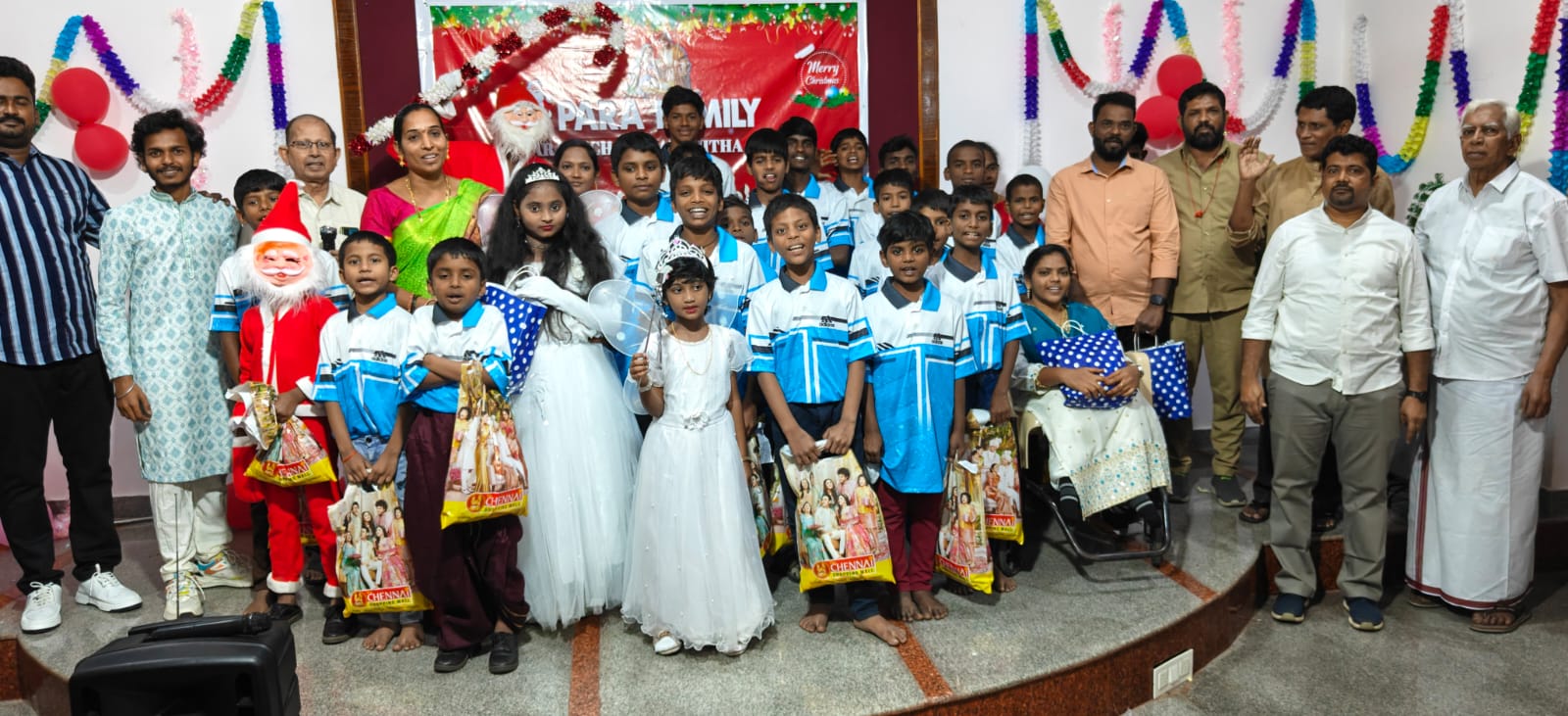
Christmas Celebrations at PARA
Posted On March 11, 2026
The joyous season of Christmas, a time of love, peace, and hope, was celebrated with great enthusiasm at PARA on 23rd December. As the world prepared to welcome the newborn Jesus, PARA opened its doors and hearts to celebrate the spirit of togetherness and compassion. The celebration was organized as a joint event by PARA in collaboration with Ekalavya Children’s Home (ECH), MACs, and Surakshita, bringing together children, staff members, and well-wishers in a spirit of unity and joy.
The program began with the blessing of the Christmas crib, symbolizing the humble birth of Jesus Christ and reminding everyone of the values of simplicity, love, and care for one another. The crib was blessed by the Director of PARA, marking the formal inauguration of the celebration. The atmosphere was filled with devotion as beautiful Christmas carols were sung, filling the campus with the message of peace and goodwill.
Following the inauguration, the campus came alive with a variety of colourful cultural performances dedicated to the Infant Jesus. Children from Ekalavya Children’s Home and Surakshita Home presented vibrant dances and meaningful skits, showcasing their talents and spreading festive cheer. Their enthusiastic performances reflected the joy and innocence of childhood while reminding everyone of the deeper meaning of Christmas—love, sharing, and compassion.
A special activity was also organized among the staff members in the spirit of Christmas friendship and appreciation. Through a joyful “Christmas Friend” gift-sharing activity, staff members shared kind and encouraging words about their assigned Christmas friend before presenting them with gifts. This created a warm atmosphere of mutual appreciation and strengthened the sense of community among the staff.
During the celebration, the Director delivered an inspiring message emphasizing the importance of building a better and safer world for children. He highlighted that children are the hope of the future and stressed the responsibility of society to protect, nurture, and guide them, especially in a time when the world is becoming increasingly challenging for young lives.
The event also strengthened the bond between the participating organizations and the children they serve. As part of the celebration, Christmas gifts were distributed to both staff members and children by the organization, bringing smiles and excitement to everyone present. The festive decorations, joyful music, and laughter created a warm and lively atmosphere throughout the evening.
The celebration concluded with a sumptuous dinner arranged for all the participants. Everyone gathered together to share the meal in a spirit of fellowship and gratitude, making the occasion even more memorable.
The Christmas celebration at PARA was not only a festive gathering but also a meaningful reminder of the values of love, care, unity, and hope. It truly reflected the spirit of Christmas and reinforced the commitment of PARA and its partner organizations to work together for the well-being and bright future of children.
Read More
Empowering Caregivers for Inclusive Child Development_Care Givers
Posted On January 9, 2026
Children with disabilities require not only medical attention but also informed, compassionate, and confident caregiving at home. Recognizing this need, a Caregivers Training Program was organized on January 9, 2026, at the Bhavitha Center in Kothapeta Mandal by People’s Action for Rural Awakening (PARA). The initiative aimed to strengthen the capacities of parents and caregivers by equipping them with practical knowledge, emotional support, and awareness of government welfare provisions.
The program was led by PARA’s CBR Coordinator, Mr. Badugu Mahima Rao, who engaged parents in an interactive session on home-based care and child development. He emphasized that a child’s disability should never become a burden on the emotional or physical health of parents. Instead, caregiving should be rooted in positivity, patience, and consistency. Parents were encouraged to teach their children Activities of Daily Living (ADL) so that they could gradually become more independent. He also stressed the importance of emotional encouragement and motivating children to perform their daily activities on their own, as far as possible.
A key component of the program focused on awareness of government welfare schemes for persons with disabilities. Ms. Mare Subbayamma, LAMP Advocacy Coordinator, provided detailed explanations on the procedures for obtaining SADAREM certificates, applying for disability pensions, and understanding eligibility for the ₹15,000 pension scheme. She also clarified assessment procedures and highlighted the legal rights guaranteed to persons with disabilities, enabling parents to better access entitlements meant for their children.
The program also marked the formal distribution of a physiotherapy kit donated by PARA to the Bhavitha Center. The kit was handed over by the Chief Guest, Ms. Leela Satyavathi, Mandal Education Officer, Kothapeta. Addressing the gathering, she urged parents to make regular use of Mid-Day Meal and Anganwadi services to ensure adequate nutrition for their children. She also appreciated the committed efforts of voluntary organizations working at the grassroots level for the welfare of children with disabilities.
Adding a practical dimension to the event, physiotherapist Dr. Nalli Sangeetha conducted a hands-on demonstration on the effective use of the physiotherapy kit. Parents learned simple exercises they could safely perform at home to support their children’s physical development, boosting their confidence in home-based rehabilitation.
The day concluded with individual counselling sessions, during which parents openly shared their concerns. A detailed needs assessment was carried out to identify medical, educational, assistive device, and welfare-related requirements, ensuring that future interventions would be more targeted and meaningful.
The program witnessed active support from Bhavitha teachers Mr. Satyanarayana and Mr. Venkateswara Rao, along with PARA DB Tech staff Mr. Prakash and Ms. Lakshmi Kala, whose collective efforts ensured the smooth conduct of the program.
In his closing message, PARA Administrator Father Simharayulu reaffirmed PARA’s commitment to standing alongside families of children with disabilities. He assured parents that PARA would continue to work towards inclusion, empowerment, and dignity, ensuring that no child or caregiver is left behind.
Read More.jpeg)
Awareness Programme on the Occasion of International Migrants Day
Posted On December 19, 2025
On the occasion of International Migrants Day, an awareness programme was jointly organized by Don Bosco for Migrants and PARA at the Brick Kiln Industry in Choppella on 18th December 2025. This programme marked the culmination of nearly eight months of persistent effort by Don Bosco for Migrants to gain access to brick kiln industries and to understand the living conditions of migrant workers, particularly migrants from other states and children who are deprived of nutrition services from ICDS due to various challenges.
Over the past several months, the project coordinator Ameer Pasha made regular visits to brick kiln industries, but initially faced resistance, as industry owners did not permit entry into their premises. Despite these challenges, continuous engagement and dialogue were maintained. Two days prior to the programme, on 16th December 2025 an unofficial meeting was held with Akula Rama Krishna, one of the brick kiln owners actively involved in migrant welfare. He took the initiative to facilitate dialogue and strongly supported the organization of this programme. As a result of his efforts, all the brick kiln owners came together for today’s awareness session, demonstrating a positive shift towards collaboration.
Participants
The programme was attended by:
- Dr. Lakshmi Sneha
- B Vara Lakshmi, ICDS Supervisor
- Thomas Pallithanam, Director of PARA
- Ameer Pasha, Coordinator of Migrant Workers
- Sukumall Ramudu, Union President of Brick Kilns
- Gandam Venkanna and Akula Rama Krishna, Brick Kiln Owners
- Officials from the ICDS Department
- PARA staff and migrant workers
The programme primarily focused on the following key issues:
- Toll-Free Helpline for Migrant Workers
Migrant workers were informed about the toll-free helpline number 9642372372, which can be contacted in case of emergencies or danger. Immediate assistance would be provided through this number. Stickers displaying the helpline number were distributed and pasted on the back of workers’ mobile phones for easy access.
- Nutrition and Educational Support for Children
Awareness was provided on the importance of nutritious food, access to ICDS services, and educational support for children living in brick kiln areas.
- Special School for Migrant Children
A request was raised for establishing a special school for children from other states, considering language and learning barriers.
- e-Shram Cards and Benefits
Detailed information was shared on e-Shram cards, their benefits, and eligibility. On-the-spot e-Shram registrations were conducted for eligible workers.
Interactive Discussion and Key Issues Raised
The programme was largely interactive, with active dialogue between ICDS officials and brick kiln owners regarding the challenges faced by migrant workers.
Dr. Lakshmi Sneha emphasized child care, hygiene practices, immunization, and addressing medical needs, especially for children and pregnant women. The ICDS Supervisor elaborated on nutrition services, pre-natal and post-natal care available under ICDS schemes.
During the discussion, a brick kiln owner, Naga Babu, raised a concern regarding two migrant women who had conceived and approached an Anganwadi Centre but were not provided nutrition support. The ICDS Supervisor assured that the matter would be reported to the CDPO for necessary action and resolution. When brick kiln owners sought clarity on grievance redressal in case of recurrence, the Supervisor assured them that such issues would not repeat and confirmed that nutrition support would be provided to all eligible women. She also mentioned the importance of Aadhaar linkage with mobile numbers for availing services.
Way Forward
The Director of PARA, Thomas Pallithanam, highlighted that the focus should not be on past shortcomings but on collective efforts to rectify gaps. He stressed that collaboration between ICDS and brick kiln owners is essential to ensure the welfare of migrant labourers. He proposed conducting a study in the Alamuru region to identify children without Aadhaar cards and assured support in facilitating access to entitlements.
Brick kiln owners collectively requested ICDS authorities to initiate a school for migrant children, preferably with English and Hindi instruction, near the brick kiln premises to address language barriers.
The programme concluded on a positive note with mutual understanding and commitment among stakeholders. The initiative marked a significant step towards improving access to welfare services, nutrition, education, and social security for migrant workers and their families, and laid the foundation for continued collaboration in the future.
Felicitation and Recognition
As part of the International Migrants Day observance, migrant workers were felicitated in recognition of their contribution and resilience. The felicitation served as a gesture of respect and solidarity with migrant labourers who play a crucial role in the brick kiln industry despite facing multiple vulnerabilities.
In appreciation of their support, cooperation, and willingness to ensure safeguarding measures, mementoes were presented to the Brick Kiln owners. This acknowledgment highlighted their positive role in facilitating dialogue, allowing access to the worksite, and showing commitment towards the welfare of migrant workers and their families.
Further, felicitation and mementoes were also presented to the ICDS Department as a mark of appreciation for their readiness and assurance to address the nutritional, health, and welfare needs of migrant labourers, pregnant women, and children. This gesture strengthened mutual trust and encouraged continued collaboration.
Read More